
AI & Computer Vision
Exploring Edge-Ready Object Detection with YOLON & YOLOL
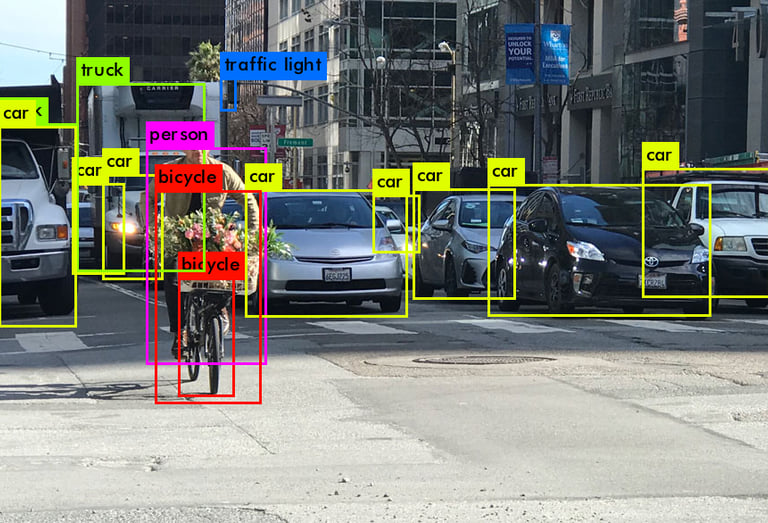
Over the past few months, I explored real-world object detection using the Ultralytics YOLO family, especially two lightweight versions, YOLON, YOLO Weight Version Nano, and YOLOL, YOLO Weight Version Light.
As part of a Jack Astor’s Bar & Grill security concept, I developed an object detection workflow focused on monitoring the counter area for visible harmful weapons such as knives and guns.
Using CVZone as a wrapper around Ultralytics YOLO models, the system was designed to process live camera feeds or recorded video and identify suspicious objects in real time. YOLON was used for faster detection in low-resource environments, while YOLOL was used where better accuracy was required.
The concept supports restaurant security by helping detect potential threats near service counters, payment areas, and customer interaction zones. It can assist staff and security teams by flagging visible harmful objects for faster review and response.
This project helped me understand how AI-powered object detection can be applied in real business environments, especially in public-facing hospitality spaces where safety, speed, and accuracy are critical..
Why Lightweight Models?
When hardware or latency is limited, full-scale models can choke.
YOLON (Nano) is built for edge devices with minimal resources while still delivering usable detection performance.
YOLOL (Light) gives a balance: higher accuracy than Nano, but still efficient enough for deployment in many real-time setups.


My Workflow & Achievements
Using CVZone as a wrapper around Ultralytics YOLO models, I built an object detection workflow focused on identifying knives and potentially harmful weapons in video or camera feeds.
The system was designed to detect and classify suspicious objects such as knives, sharp tools, and other non-standard harmful items from live footage or recorded video.
I developed a flexible workflow that can switch between lightweight YOLO models for faster detection and larger YOLO models for higher accuracy, depending on the security requirement and available system resources.
The solution was tested across different indoor and public-area surveillance scenarios to evaluate detection accuracy, object visibility, lighting conditions, movement, and camera angles.
This project supports real-time security monitoring by helping identify visible harmful objects and alerting operators for faster review and response.
Key Takeaway
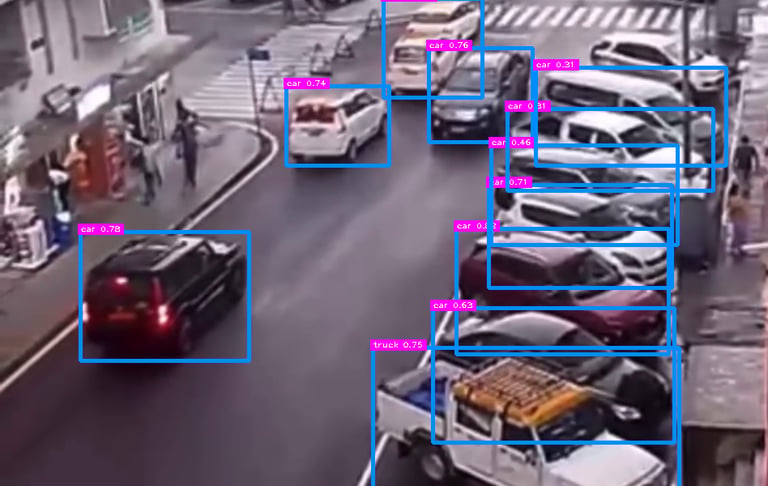
Choosing the correct YOLO model matters in security-based object detection. When hardware resources are limited, YOLON delivers faster and more efficient inference. When better accuracy is required and slightly higher latency is acceptable, YOLOL becomes the better fit.
CVZone simplified the development workflow by making model integration, bounding box drawing, label handling, and live-feed visualization easier. This helped me prototype and test the harmful weapon detection concept faster.
For the Jack Astor’s Bar & Grill concept, the system focused on monitoring the counter area for visible harmful objects such as knives and guns. The goal was to support faster threat identification in public-facing restaurant spaces.
Real-world testing brought practical challenges. Lighting changes, partial object visibility, camera angles, object size, and counter movement can all affect detection quality. A model may perform well in a lab environment, but real-world restaurant conditions create edge cases that must be tested carefully.
This project helped me understand how YOLO-based object detection can support security monitoring in hospitality environments, especially where quick detection and human review can improve response time.
What’s Next?
Fine-tuning YOLOL on custom datasets (e.g., local traffic patterns, specific vehicle types) to improve accuracy further.
Exploring hybrid mode: detect with YOLON, then if uncertain escalate to YOLOL for refinement.
Integrating alerts or analytics that act on detection events (for example: unauthorized vehicles, crowd monitoring, traffic anomaly detection).
If you’re interested in computer vision solutions — whether object detection on edge devices, camera analytics, or integrating YOLO models into your workflow — feel free to reach out. I’d be happy to share more of my findings, demos, or even work together.
Let’s bring vision to reality!
— Aakash Pradhan
Cybersecurity & IT Specialist | Web & CV Systems
[Contact me for collaboration]
Aakash Pradhan
Tech strategist and problem-solver, ready to enhance security, efficiency, and digital performance.